

 Products
 Bars
Bars
 Beads & Spheres
 Bolts & Nuts
 Crucibles
 Discs
Discs
 Fibers & Fabrics
 Films
Films
 Flake
Flake
 Foams
Foams
 Foil
Foil
 Granules
 Honeycombs
 Ink
Ink
 Laminate
 Lumps
Lumps
 Meshes
 Metallised Film
 Plate
Plate
 Powders
 Rod
Rod
 Sheets
 Single Crystals
 Sputtering Target
 Tubes
Tubes
 Washer
 Wires
Wires
 Converters & Calculators
 Write for Us



Top Crucibles for High-Temperature Laboratory and Industrial Uses
In laboratory and industrial contexts, crucibles serve as essential tools for high-temperature processes such as melting, calcining, and sintering. These crucibles must withstand extreme temperatures, resist corrosion, and maintain structural integrity under stress. We will discuss the most commonly used materials for high-temperature crucibles, their properties, and the industries that rely on them.

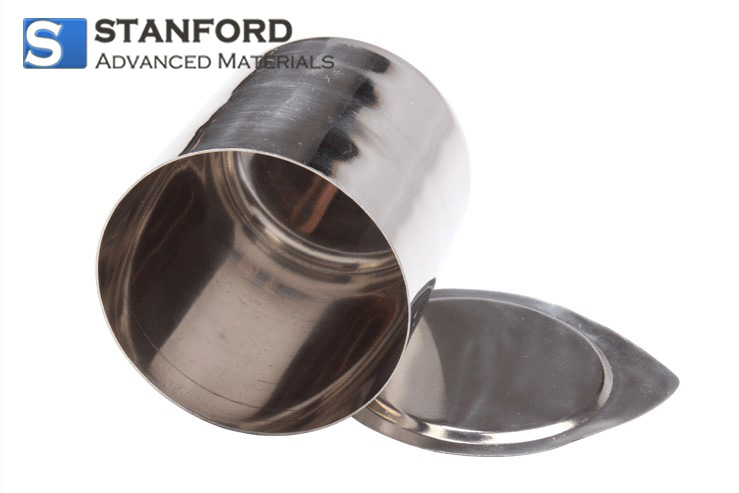
1. Platinum Crucibles – High Precision and Corrosion Resistance
Platinum crucibles can be regarded as one of the most suitable materials for high-temperature applications where accuracy and high chemical resistance are required.
One notable property of Platinum is its high resistance to corrosion and oxidation when exposed to elevated temperatures. The reason for its durability lies in its melting point of 1,768°C, which allows it to endure extreme temperatures without undergoing deformation or degradation, making it ideal for very sensitive applications. Platinum's non-reactive properties ensure that it does not contaminate the materials it contacts. Its ability to withstand extreme temperatures also highlights its durability.
Due to its properties, platinum crucibles are widely used in precise chemical analysis and synthesis of various substances, particularly in spectroscopy and analytical chemistry. In jewellery making, this crucible is an indispensable laboratory tool for working with precious metals, such as gold, silver, and platinum, in their melting and refining processes, which must maintain a specified purity level. Platinum crucibles have also found use in laboratory experiments conducted at high temperatures, necessitating the ultimate properties of resistance and chemical inertia in laboratory containers.

2. Alumina Crucibles – Cost-Effective and Durable
Alumina crucibles are extensively used in laboratories and industries because of their good heat stability, economical cost, and resistance to chemicals.
The high melting point of alumina, approximately 2,070°C, guarantees that it can withstand the high thermal stresses found in laboratory settings. Additionally, it exhibits high resistance to thermal shock and corrosion. Furthermore, alumina is durable and resistant to wear, meaning it can serve effectively over an extended period.
Alumina crucibles are utilised in material testing, especially in laboratories that focus on metal alloys and ceramics. Furthermore, they are essential in the melting/sintering processes of metal powder materials that require controlled high temperatures. In the ceramics industry, these materials are necessary for firing ceramics, achieved through controlled heat distribution. They can also be used for material testing.

3. Graphite Crucibles – Excellent Heat Conductivity and Rapid Heating
The key feature of this crucible is its extremely high thermal conductivity, enabling rapid heating. Additionally, it cools quickly, which is beneficial.
The graphite crucible features characteristics including a high melting point of approximately 3,000°C, excellent thermal conductivity, and resistance to thermal shock. High thermal conductivity ensures uniform temperature distribution, thereby minimising the risk of overheating and deformation. Moreover, graphite is lightweight and easy to handle.
Graphite crucibles have multiple applications in sectors such as metallurgy and casting. They are ideal for melting metals such as gold, aluminium, copper, and steel, as they can endure the high temperatures required to melt these metals. Graphite crucibles are also employed in metal casting processes in the foundry sector, functioning as a casting chamber that creates a stable casting environment. Finally, they can be utilised in laboratories for synthesising compounds and materials when exposed to high temperatures.
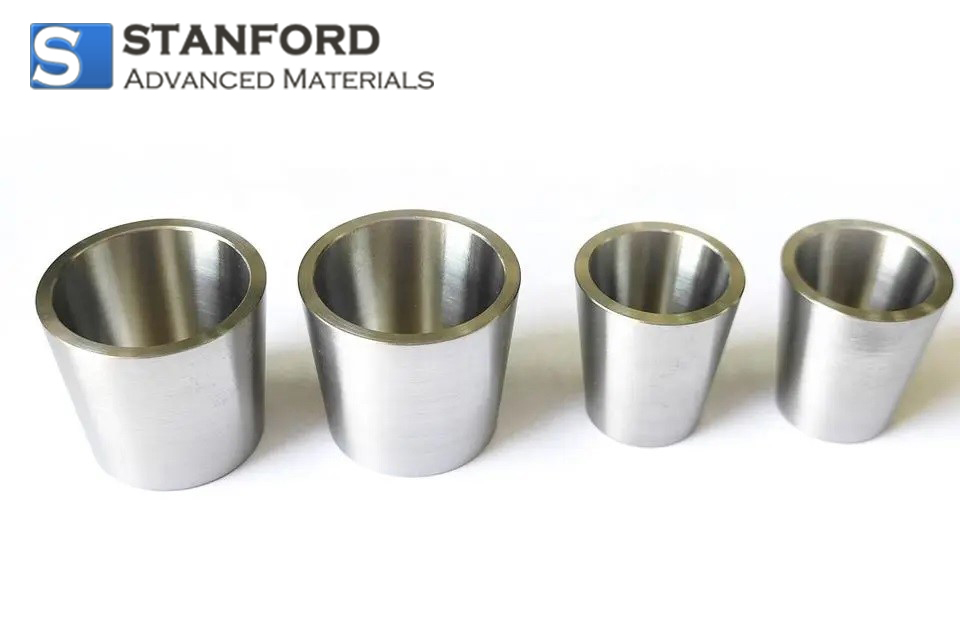
4. Molybdenum Crucibles – Durability in Extreme Heat
Molybdenum crucibles are used in applications that require very high temperatures, which can easily damage ordinary materials. Although very costly, molybdenum crucibles have some advantages.
Molybdenum possesses a melting point of 2,623°C and is well-regarded for its resistance to oxidation at elevated temperatures. Molybdenum crucibles resist heat effectively and withstand various corrosive chemical agents. It is important to note that as a metal with exceptional properties, molybdenum loses some of these characteristics when exposed to high temperatures and oxides in non-inert environments.
Molybdenum crucibles are also employed in semiconductor production, where they play a role in processes such as single-crystal growth and high-temperature material synthesis owing to their oxidation-resistant properties and high thermal stability. The aerospace industry also uses molybdenum crucibles in the production of high-performance alloys, while materials science research related to advanced material processing at elevated temperatures may also utilise these crucibles.
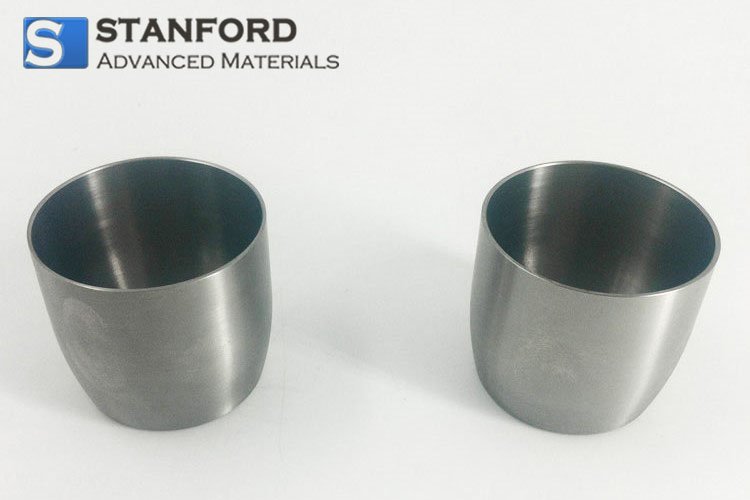
5. Tungsten Crucibles – Exceptional Heat Resistance for the Most Challenging Conditions
Tungsten crucibles have been identified as the most suitable alternative for applications involving temperatures that exceed the capabilities of many materials.
Tungsten possesses the highest melting point of all metals, at a temperature of 3,422°C. It also demonstrates good resistance to thermal expansion, implying it will not distort or change in response to temperature variations. Additionally, it is strong, capable of withstanding temperatures that would cause failure in other materials. Pure tungsten is brittle, thus it is combined with other substances to enhance its strength while preserving its attributes.
Tungsten crucibles are employed in high-temperature research contexts for the production of materials used in aerospace, nuclear, and electronics technology. Tungsten crucibles are also applicable in laboratory settings for heating materials beyond the limits of most crucibles.
Summary Table: Top Crucibles for High-Temperature Uses
|
Material |
Melting Point (°C) |
Key Features |
Common Applications |
|
Platinum |
1,768 |
High corrosion resistance, durability, precision |
Jewellery refining, chemical analysis |
|
Alumina |
2,070 |
High thermal stability, chemical inertness |
Material testing, metallurgy, ceramics |
|
Graphite |
3,000 |
High thermal conductivity, rapid heating/cooling |
Metal melting, foundries, casting |
|
Molybdenum |
2,623 |
High heat resistance, oxidation resistance |
Aerospace, semiconductor, materials science |
|
Tungsten |
3,422 |
Highest melting point, strength, low thermal expansion |
High-temperature research, rare metals |
Related reading: A Comprehensive Guide to Laboratory Crucibles
Conclusion
Selecting the appropriate crucible for high-temperature applications is critical for laboratory and industrial processes. From platinum's precision and corrosion resistance to tungsten's ability to endure the most extreme temperatures, each type of crucible offers distinct advantages. Whether for chemical analysis, metal melting, or material synthesis, the correct crucible material ensures that processes operate smoothly, efficiently, and safely.
 Dr. Samuel R. Matthews

